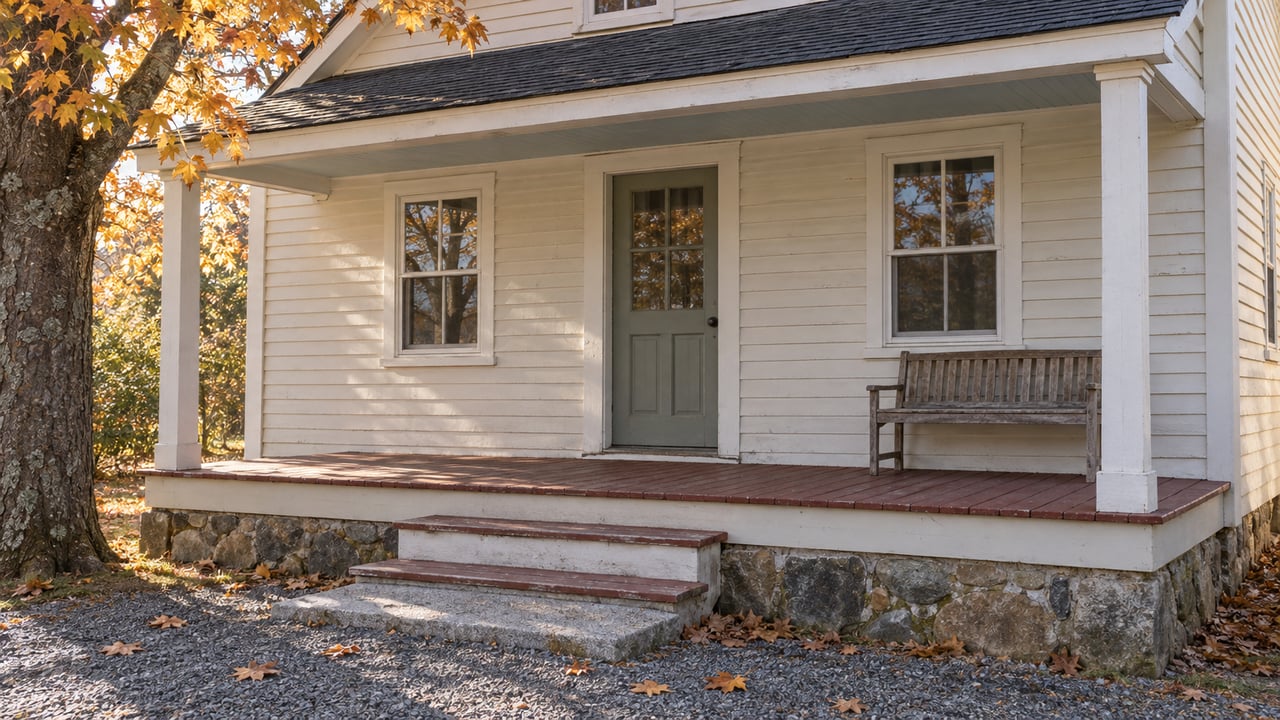
What You Actually Own When You Buy a Cottage on Alton Bay's Camp Meeting Grounds
October 29, 2026
"The cottage only, and not any interest in land, is being purchased and sold." The Alton Bay Campmeeting Association's written procedure calls for this language in purchase and sale agreements for cottages on the grounds.
That clause explains most of what follows. The grounds sit at the head of Alton Bay on Lake Winnipesaukee, and asking prices there can look low next to a deeded cottage elsewhere in town. The Association's policies cover tenancy and annual fees.
The Association's tenancy policy sets eligibility criteria, requires references and an interview, and is published in the Association's policy book for anyone who wants to read the full text before making an offer.
Owners carry a second obligation besides the tenancy. Each cottage owner is assessed an annual Cottage and Land Use Fee, which supports the Association's services and ministries. The board sets the amount each year. The policy also addresses unpaid fees, accrued interest and a $25 monthly fee. The general payment policy lists January 31 as the annual due date unless a payment plan is arranged.
The cottage purchase policy says all cottages for sale are announced through the ABCA office and posted on the bulletin board in the Administration building. It also says cottages "are not to be sold through real estate agents or advertised third party." People who file a written, dated request to buy can ask to be notified when a cottage comes up.
The written procedure describes a purchase and sale agreement, a non-refundable $300 tenancy application fee, forms, references and a tenancy hearing before the Executive Committee of the Board of Directors.
The procedure also addresses heating-equipment and electrical-wiring inspections before a sale.
For a seller, this cuts the pool of buyers down to people who know the grounds well enough to watch a bulletin board and are willing to go through a hearing. That narrower pool is part of what an asking price reflects.
A winter cottage use policy, approved April 11, 2026, covers November 1 through April 15. This post goes up on a Thursday. The winter window opens three days later, on Sunday, November 1.
Under the policy, winter residency is "a privilege." It is approved one year at a time, can't be transferred, and the Executive Committee can revoke it at any time. The policy also addresses winterization and safety requirements. The fees:
| Winter option, November 1 to April 15 | Fee |
|---|---|
| Full winter season, 2026 | $900 per residence |
| Full winter season, 2027 and beyond | $1,200 per residence, subject to annual review |
| Weekend-only use: weekends, holidays or short stays | $500 |
The policy says any use of a cottage during the winter season, even one day, requires one of these options. Under the policy, winter fees were due October 15. They cover shared plowing, water-system oversight, sewer use, infrastructure wear and administration. Town water billing and individual utilities are not included.
The winter policy also discusses municipal restrictions. It says winter residency is subject to those restrictions, including "the Town of Alton cap of 26 year-round residences," citing board minutes dated October 9, 2010, unless the Town changes it. The Association's homepage describes the grounds as home to more than 140 private cottages.
The Association's rental policy addresses summer and off-season rentals, rental applications and long-term tenancy. It prohibits year-round rentals.
The Town's records match the contract language. An Alton assessment card for one privately owned cottage on the grounds, printed in February 2023, values the building and lists the land at $0. The Association's own parcel, Map/Lot 34/33, is on a separate card with its land value and a religious exemption. That card dates from 2023, and it shows the setup: a building on one card and the ground on another.
This arrangement goes back decades. In a 1968 decision, the New Hampshire Supreme Court noted that cottage owners paid taxes on their buildings. It held that Association land leased to private cottage owners was not tax-exempt, because that land was used mainly for the owners' private purposes and not for the Association's religious purposes. Alton bills property owners twice a year. The second bill uses the April 1 assessment and the state-set rate, according to the Town's tax page.
The way the grounds work today follows from how they began. According to the Association's history, the first camp meeting began September 7, 1863, on land first leased from the Boston and Maine Railroad. The Association incorporated in 1876. Alton's adopted Master Plan also dates the Alton Bay Camp Meetings to 1863.
The grounds grew from four acres to 78 and had more than 400 cottages before the 1945 fire. The Easter 2009 fire destroyed 45 cottages. Today the Association describes more than 67 acres and more than 140 private cottages. For over 160 years, families have owned the buildings while the land belonged to someone else.
The Association's own listings page posts cottages for sale with campground approval for membership required.
Can an agent list or show one of these cottages? The Association's purchase policy says cottages are not to be sold through real estate agents or advertised by third parties. Sales are announced through the ABCA office.
Is the annual fee published? The policy says the board sets it each year and doesn't state a standard amount. Ask the ABCA office for the current figure before you sign.
All of this is general information based on the Association's published policies and public records. It isn't legal, tax or financial advice, so check your own situation with an attorney, accountant or lender before you commit.
If you're considering a cottage or another property around Alton Bay, I'm happy to talk about the area. Let's Connect through Martha Trepanier.
Stay up to date on the latest real estate trends.
Partner with a seasoned professional who knows every corner of the Lakes Region. From navigating the initial search to securing the keys, you will receive dedicated, one-on-one guidance tailored to your goals. Let’s make your transition to the Wolfeboro area seamless, stress-free, and successful.
ADDRESS
305 N Line Rd
Wolfeboro, NH 03894
OFFICE ADDRESS
15 Railroad Avenue
PO Box 738
Wolfeboro, NH 03894
Mon - Sat: 8AM - 10PM
Sun: 11AM - 4PM