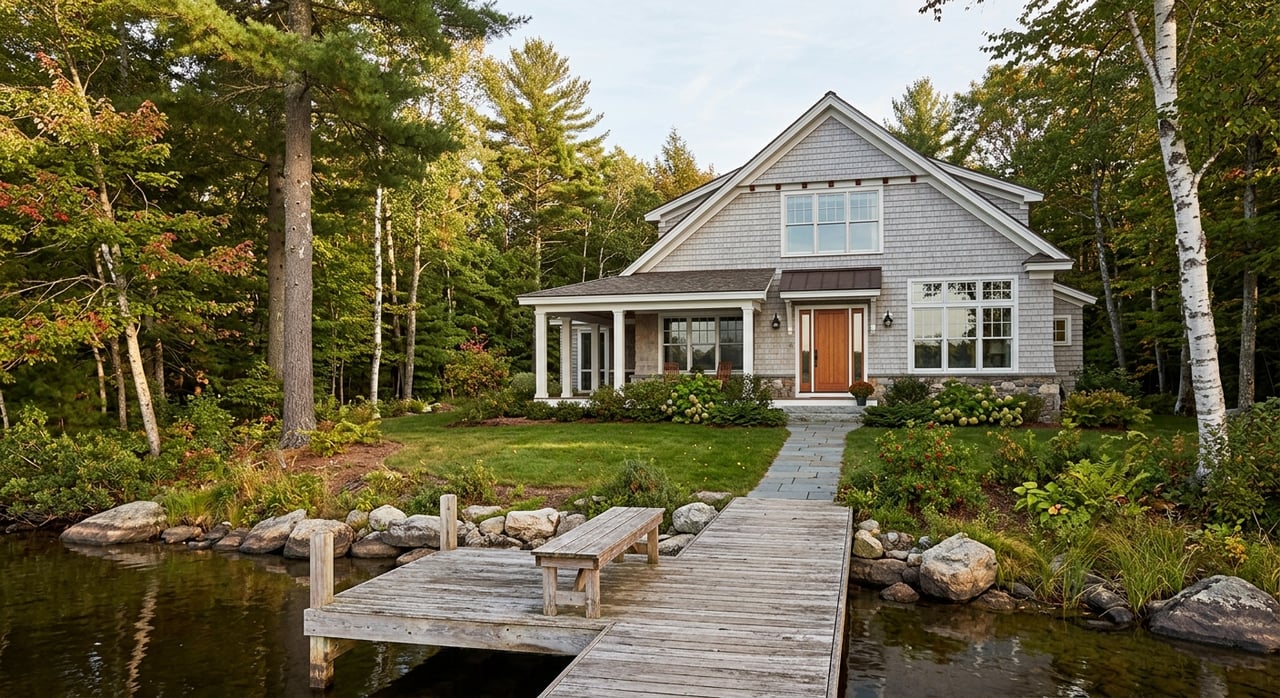
What Living in Wolfeboro NH Is Really Like
July 2, 2026
July 2, 2026
Thinking about living in Wolfeboro, NH? If you want a town where you can walk to the waterfront, enjoy a real four-season rhythm, and still feel connected to everyday services and community life, Wolfeboro stands out. Whether you are planning a full-time move, looking for a second home, or simply trying to understand the area better, this guide will help you picture what life here is really like. Let’s dive in.
Wolfeboro sits on the eastern shore of Lake Winnipesaukee, at the head of Wolfeboro Bay. According to town materials, the town covers about 58 square miles, with roughly 10 square miles of water. That balance of land and water shapes daily life in a way you notice quickly.
Wolfeboro is often described as a lake town with a village center, and that is a big part of its appeal. The town’s history materials say Wolfeboro claims the title of America’s oldest summer resort, but it is more than a seasonal destination. It also functions as a year-round community with local services, cultural institutions, recreation, and a strong civic identity.
The population helps explain that mix. Census data lists 6,416 residents in 2020, while a town profile points to a summertime population of more than 25,000. In simple terms, Wolfeboro has a very different energy in July than it does in January, but it remains active in both seasons.
One of Wolfeboro’s biggest draws is its compact downtown. The town’s 2019 Master Plan describes downtown as a walkable village with distinctive architecture, parks and open space, and a mix of retail, restaurants, offices, civic uses, and housing. If you value being able to park the car and enjoy the day on foot, that matters.
Pedestrian movement is not just a nice extra here. The Master Plan says it is a critical mode of transportation downtown. That tells you something important about how the center of town works and why it feels more connected than many small communities.
You will also find everyday places that support year-round living. Town materials highlight coffee houses, bakeries, restaurants, and ice cream shops, along with larger anchors like Huggins Hospital and Brewster Academy. Together, they give Wolfeboro a steady local base beyond the visitor season.
Downtown living in Wolfeboro is closely tied to public space. Cate Park serves as the town’s waterfront gathering place, and public docks bring Lake Winnipesaukee right up to the downtown area. That makes the lake feel like part of ordinary life, not just a backdrop.
Foss Field, near Back Bay, adds another layer to the village feel. It is a multi-use recreation area connected to the local path network, which means outdoor space is woven into the center of town. For many buyers, that combination of water, walkability, and open space is hard to find.
If you are moving to Wolfeboro for the water, you will have plenty to explore. Lake Winnipesaukee is New Hampshire’s largest lake, and Wolfeboro’s town profile emphasizes boating, fishing, paddling, and swimming as core parts of local life. In many ways, the lake is the town’s front yard.
Wolfeboro is not only about Winnipesaukee, either. Official town materials also list Lake Wentworth, Crescent Lake, Rust Pond, Upper Beech Pond, Mirror Lake, and Sargents Pond among the community’s water bodies. That broader lake presence helps give the town its distinctly lake-centered character.
Public access is a practical plus. The town maintains public docks and boat ramps at Dockside, Back Bay, Mast Landing, and Libby Museum. If lake access matters to your home search, this public infrastructure is worth understanding alongside any private waterfront or lake-access options you may be considering.
Wolfeboro offers more than boating season. The Parks & Recreation Department says the town has five parks, three sandy beaches, the Bridge Falls Path, Abenaki Ski Area, and Pop Whalen Ice & Arts Center. For a town this size, that is a broad recreation system.
Bridge Falls Path is a half-mile multi-use trail that runs from the Railroad Depot downtown to Wolfeboro Falls. The Abenaki-Sewall Woods bike paths connect Abenaki Ski Area to downtown and Sewall Woods. These connections make it easier to enjoy the outdoors without needing a major day trip.
Winter is a real part of the local lifestyle here. Town recreation information points to public skating, hockey, curling, and skiing at Pop Whalen and Abenaki. Cross-country ski trails also open when conditions allow, so the cold months still bring activity instead of a full slowdown.
Seasonality is one of the most important things to understand before buying in Wolfeboro. Summer brings sailing, swim lessons, and free concerts at the Cate Park bandstand. The warmer months also bring more traffic, more visitors, and a busier downtown rhythm.
Fall shifts the mood but keeps the community active. Town recreation materials highlight events like the Turkey Trot and Fall Festival, which help keep local life centered around shared spaces and traditions. For many residents, fall is one of the best times to enjoy the area.
Winter and early spring feel quieter, but not empty. Pop Whalen opens in September for fall and winter programs, and Abenaki begins operating in December. If you are considering a full-time move, it helps to think about whether you enjoy a place that changes noticeably from season to season.
Wolfeboro has a stronger cultural and civic identity than many people expect from a small town. The town profile points to Great Waters concerts, the Village Players, and the Wright Museum of World War II as part of the local cultural mix. These are not side notes. They help shape what it feels like to live here.
The Clark Museum Complex on South Main Street adds to that history-forward identity with summer programs, exhibits, and tours of historic buildings. Town efforts to preserve historic buildings, neighborhoods, and traditions also show a community that pays attention to its character over time.
That sense of identity often matters to buyers as much as square footage or lot size. If you want a town that feels established, active, and rooted in place, Wolfeboro checks many of those boxes.
If you are starting a home search, the local housing mix is useful context. Wolfeboro’s 2019 Master Plan says roughly 75% of housing units are single-family dwellings, with smaller shares in attached and multi-family types. That means many buyers will be looking at detached homes, seasonal properties, and lake-oriented homesites.
Census QuickFacts show that 78.1% of housing units are owner-occupied. The same source lists a median owner-occupied home value of $546,500 and a median gross rent of $1,103. These figures give a broad sense of the market, though individual neighborhoods and property types can vary widely.
The town also appears to have a meaningful seasonal component. The water utility reports about 200 seasonal connections, which supports the idea that second homes and seasonal use remain part of the local housing picture. For buyers, that can influence everything from inventory patterns to how different parts of town feel at different times of year.
Wolfeboro can appeal to several types of buyers. Some are looking for a second home near the lake. Others want to retire in a town with services, recreation, and a walkable center. Some buyers are simply looking for a year-round home in a community with a strong sense of place.
It is also worth noting that Census data shows 34.6% of residents are age 65 and older, while 13.7% are under 18. That does not define any one neighborhood or household, but it does suggest a community with a notable older population and a relatively stable resident base.
Before you make a move, try to match your home search to how you actually want to live. In Wolfeboro, location decisions often come down to a few core questions:
These questions matter because Wolfeboro is not just one kind of market. Village properties, waterfront homes, seasonal camps, and homes on wooded lots can offer very different day-to-day experiences.
Wolfeboro is the kind of market where local knowledge can make a real difference. Two homes may have similar price points but very different lifestyle value depending on water access, village proximity, seasonal patterns, or how the property fits your plans.
That is especially true if you are buying from out of state or comparing Wolfeboro with nearby Lakes Region towns. Having someone who knows the local rhythm, property types, and practical tradeoffs can help you narrow the search and move with more confidence.
If you are thinking about buying or selling in Wolfeboro, working with someone who knows the town beyond the listing details can save time and reduce stress. For personalized guidance on Wolfeboro and the Lakes Region, connect with Martha Trepanier.
Stay up to date on the latest real estate trends.


Partner with a seasoned professional who knows every corner of the Lakes Region. From navigating the initial search to securing the keys, you will receive dedicated, one-on-one guidance tailored to your goals. Let’s make your transition to the Wolfeboro area seamless, stress-free, and successful.
ADDRESS
305 N Line Rd
Wolfeboro, NH 03894
OFFICE ADDRESS
15 Railroad Avenue
PO Box 738
Wolfeboro, NH 03894
Mon - Sat: 8AM - 10PM
Sun: 11AM - 4PM